
DM Toolbox: The Rule of Cool — When to Break the Rules for a Better Story
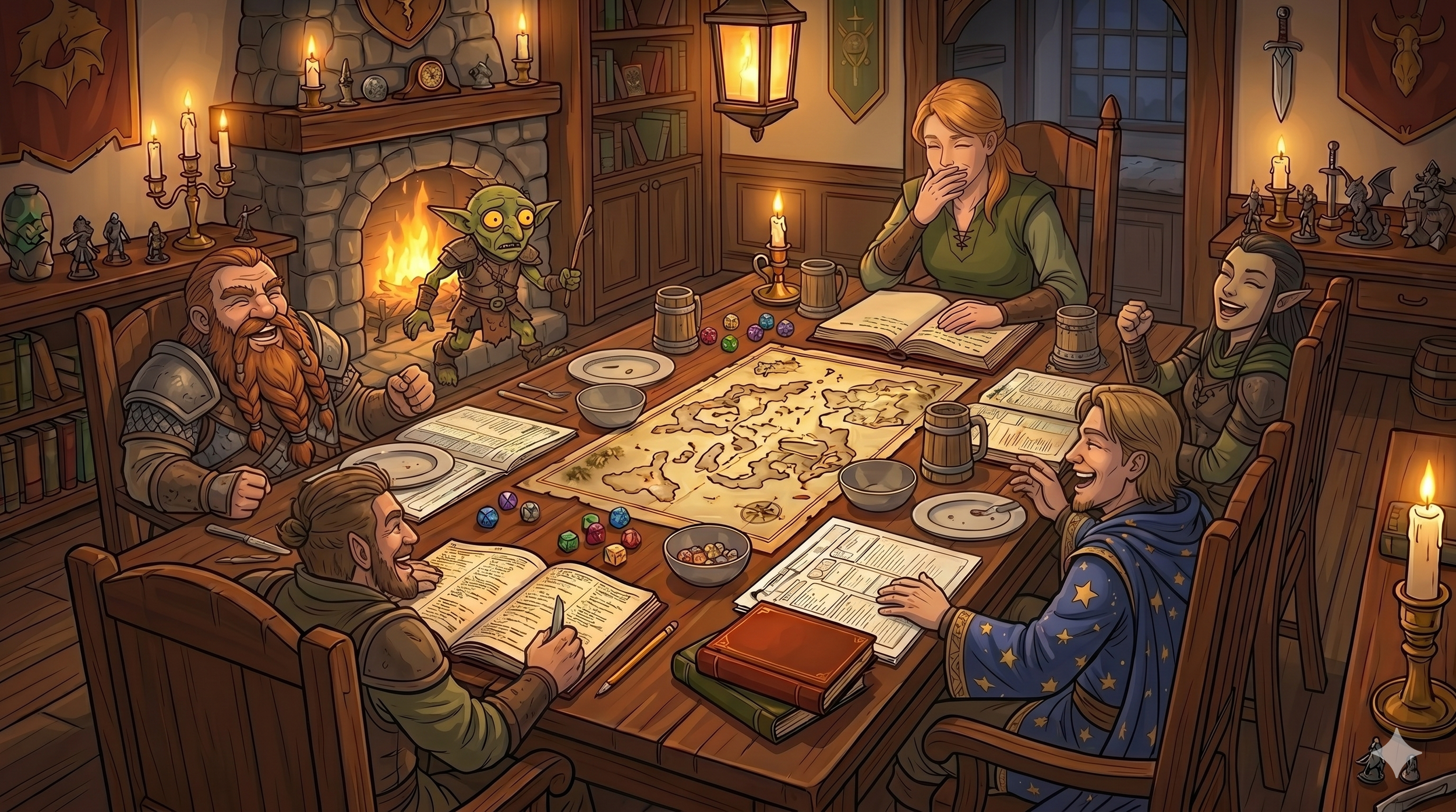
5 adventurers, 1 goblin…
The rulebook is a suggestion. A very good suggestion. But still — a suggestion.
Here's a scenario.
Your player is a Cleric. They're in the middle of a chaotic goblin ambush. They look at you across the table and say: "Can I use Command to make the goblin walk into the fire and burn himself alive?"
The rules say no. Command makes a creature take a single action — things like "flee," "halt," "grovel." "Walk into fire and self-immolate" is not exactly in the approved vocabulary list.
But it's hilarious. It's creative. The whole table is leaning in. Everyone wants to see if it works.
So what do you do?
You let it happen. You describe the goblin's confused little face as it turns, marches directly into the campfire, and shrieks. The table loses it. Dice are slammed. Someone spills a drink. It becomes a story your group tells for years.
That's the Rule of Cool. And knowing when — and how — to use it is one of the most important skills you'll develop as a DM.
What Is the Rule of Cool?
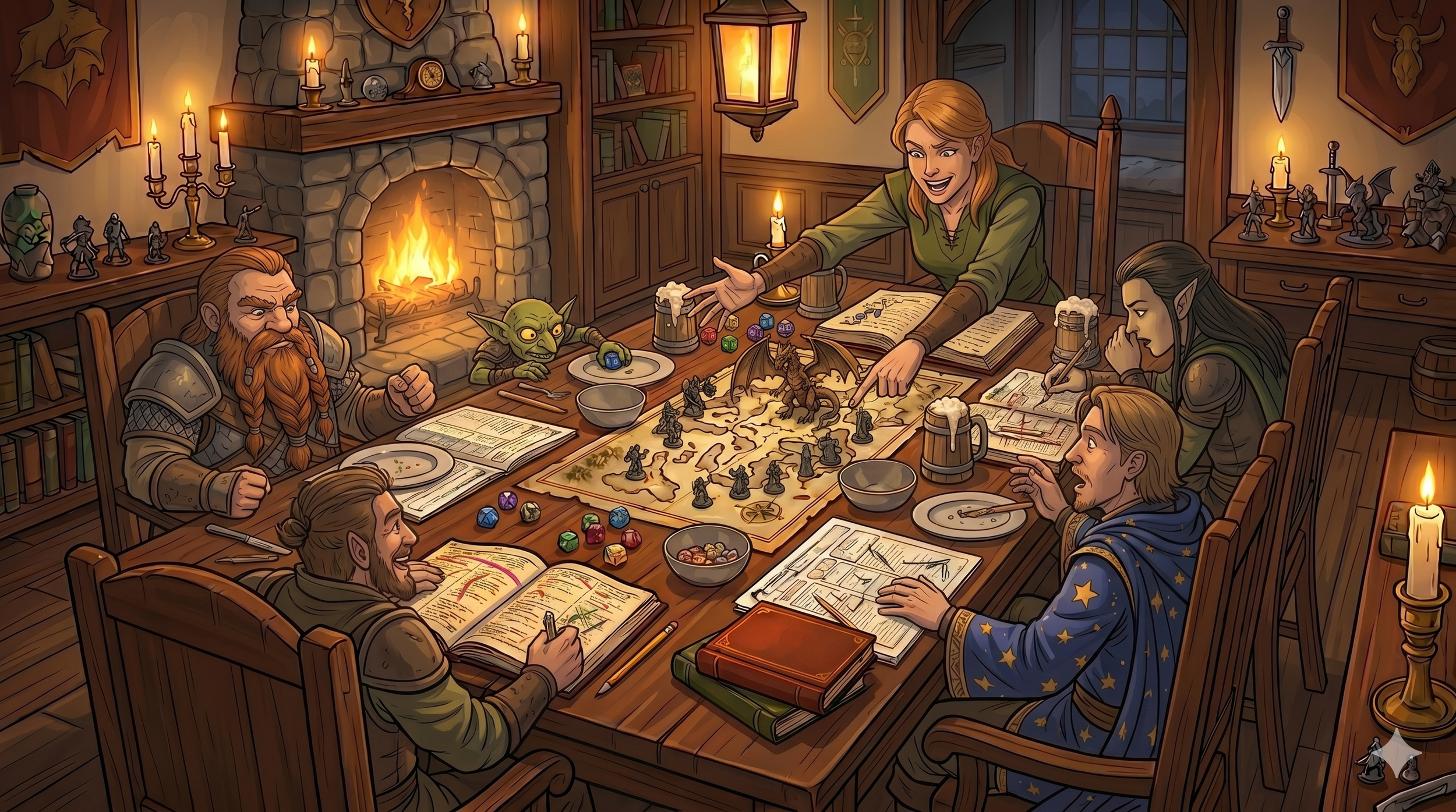
The Rule of Cool is an unofficial DM principle that says: if something is fun, creative, cinematic, and reasonable, let it happen — even if the rules don't technically support it.
It's not about ignoring the rules entirely. The rules exist for good reasons — they create structure, balance, and fairness. But D&D is also a storytelling game, and sometimes the story wants to do something the rulebook didn't anticipate.
The Rule of Cool is the bridge between those two things.
Why It Matters More Than You Think
New DMs often fall into one of two traps.
Trap #1: Rules lawyer mode. Every player request gets a rulebook check. Creative ideas get shot down because they don't technically work. The game grinds to a halt while someone looks up the exact wording of a spell. Players start feeling like the rules are working against them.
Trap #2: Full chaos mode. Anything goes, all the time, with no consistency. Players figure out that creativity always wins, so they stop engaging with the actual mechanics and just pitch increasingly unhinged ideas. Balance evaporates. Encounters stop mattering.
The Rule of Cool lives in the middle. It's a judgment call — and developing that judgment is what separates a good DM from a great one.
The Three Questions to Ask Yourself
Before you let something slide on Rule of Cool grounds, run it through these three questions quickly. This takes about four seconds once you've done it a few times.
1. Is it fun for everyone at the table?
Not just the player asking. Does this moment create something the whole group gets to enjoy? The goblin-on-fire example worked because everyone was in on it. If a ruling only benefits one player at the expense of others — or breaks the encounter in a way that makes it feel pointless — that's a different calculation.
2. Does it make narrative sense?
"Cool" doesn't mean physically impossible or completely disconnected from the fiction. A Rogue using an Immovable Rod to wedge open a portcullis while the party escapes? Cool and narratively coherent. A level 2 Wizard one-shotting a dragon because they "really want to"? Less so. The Rule of Cool still needs to fit within the world, even loosely.
3. Will it cause problems later?
Some rulings are one-time moments. Others accidentally set precedents. If you let a player do something once, they — and everyone else at the table — will expect to do it again. That's fine if the ruling is genuinely reusable. It's a problem if it breaks your game long-term. Think one step ahead before you say yes.
If your answer to all three is "yes, yes, and no" — let it rip.
Real Examples: Cool vs. Not Cool
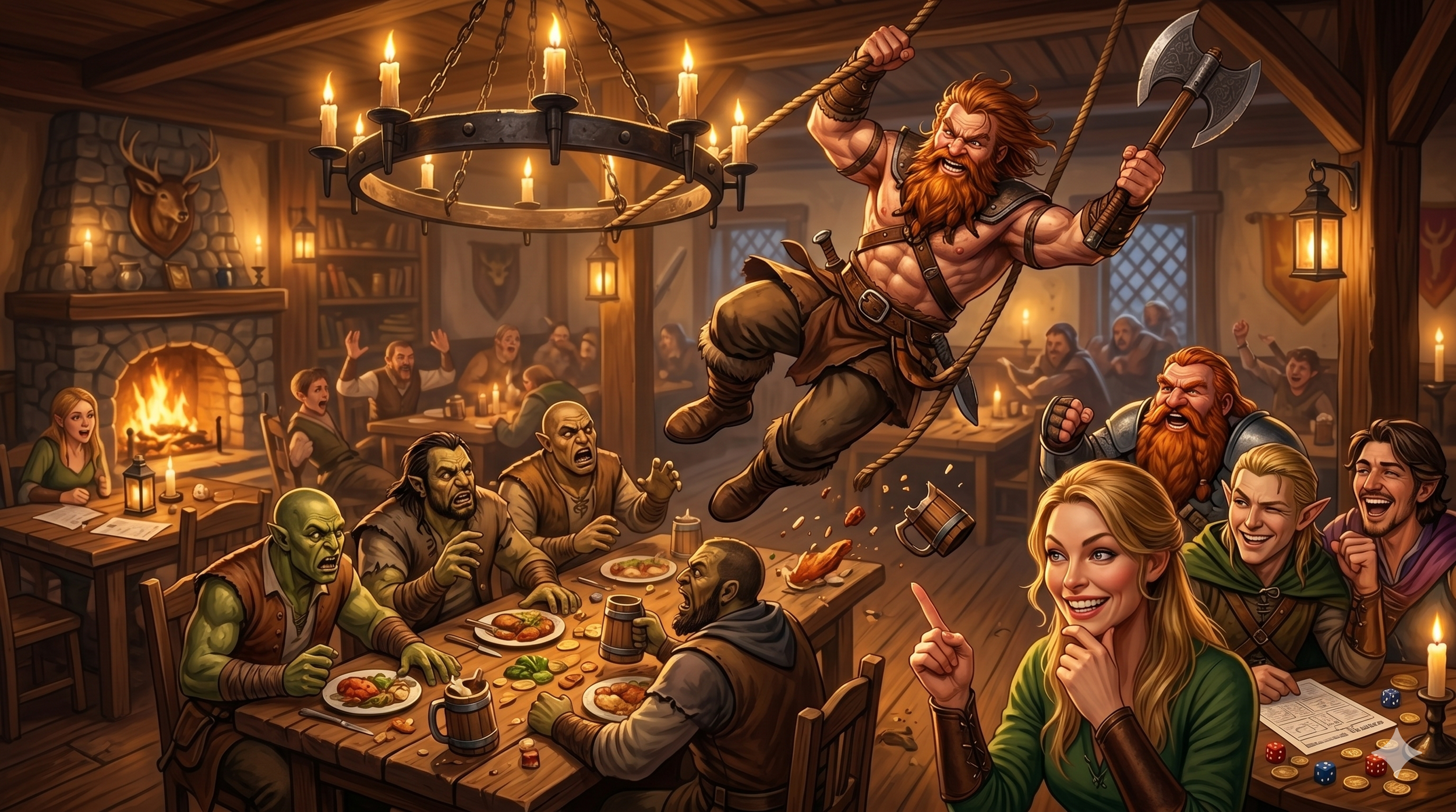
Flying high, defying gravity…
Let's make this concrete.
Cool: Your Barbarian wants to grab a chandelier, swing across the tavern, and land on the enemy's table to start a brawl. The rules don't have a specific "chandelier swing" mechanic. You call for an Athletics check, set a reasonable DC, and let the fiction do the rest. Everyone is delighted.
Also cool: Your Bard tries to seduce the dragon into giving up its treasure through a Performance check and a verypersuasive speech. Technically outlandish. Mechanically supportable (Persuasion/Performance exist). Narratively hilarious. Let it play out. Even if it fails, that's a great story.
Not cool: Your Fighter wants to instantly kill the boss at full health because they rolled a natural 20 on an attack. A nat 20 is a critical hit — doubled damage dice — not an automatic kill. This one gets the rules-as-written treatment, because overriding it undermines the whole structure of combat and makes your boss fight feel pointless.
Also not cool: One player keeps pushing Rule of Cool requests that conveniently let them skip challenges entirely. That's not creativity — that's optimization wearing a creative costume. It's okay to say "that's a great idea, but it needs to cost something."
How to Say No Without Killing the Vibe
Sometimes the answer is no. The idea is too broken, too unfair, or just doesn't make sense in the world. Here's the thing though — how you say no matters as much as the no itself.
Don't just say "that's not how the rules work." That's a dead end and it makes players feel punished for being creative.
Instead, try:
"Yes, and it'll cost you." The idea works, but there's a risk or a price. Maybe they need to roll with disadvantage. Maybe success has an unintended side effect. This keeps the creativity alive while adding stakes.
"Not quite — but what if…" Redirect toward something adjacent that does work. "You can't Command him to walk into the fire, but you could Command him to flee — and if he runs toward the fire, that's on him." Same energy, rules-compliant.
"That's outside what your character can do right now — but maybe later." Some ideas are great but just not appropriate for the current level, class, or situation. Plant it as a future possibility. Players love feeling like their ideas have been heard even when the timing isn't right.
The Most Important Thing
Here's what I want you to take away from this.
The goblin-in-the-fire moment I mentioned at the top of this article? That happened in one of my first sessions as a player. The DM said yes, we all lost our minds, and we looked up the rules after. Turns out Command absolutely cannot be used that way.
Nobody cared. Not even a little.
What we remembered was the moment. The chaos. The tiny goblin marching to his fiery doom with a thousand-yard stare. That memory has lasted longer than any technically-correct ruling ever would have.
The rules are there to serve the story. When they do that well, follow them. When the story needs something the rules didn't plan for — and it's fun, fair, and makes sense — trust your instincts.
Say yes. See what happens.
That's the whole game.
Want more DM tips? Check out our DM Toolkit and our guide to magic items for new DMs.
What's the wildest Rule of Cool moment you've ever had at the table — as a player or a DM?