
DM Toolbox: How to Run Your First Session (A Pre-Game Checklist)
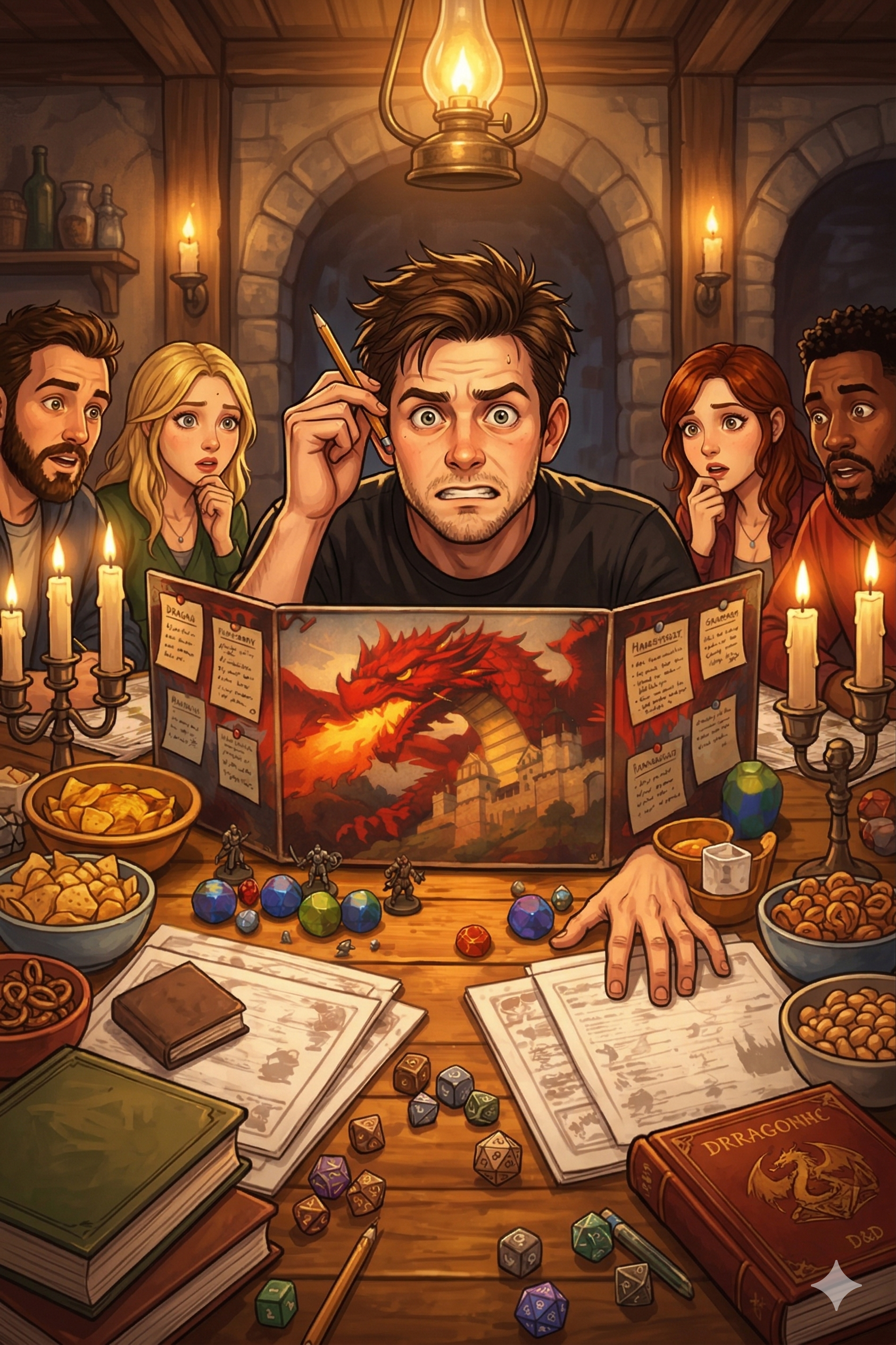
Its all about the snacks.
The night before your first session, you will convince yourself you are not ready. You are wrong. Here's how to prove it.
So the date is set. Your friends are coming over (or logging on). Someone bought snacks. And you — brave, slightly panicked soul that you are — have agreed to be the Dungeon Master.
First of all: good. The world needs more DMs. Second of all: breathe. You don't need to have everything figured out. You just need to have the right things figured out.
This checklist is designed to get you from "I think I'm ready?" to "okay, I'm actually ready." Print it. Screenshot it. Tattoo it on your forearm. Whatever works.
The Night Before: Prep That Actually Matters
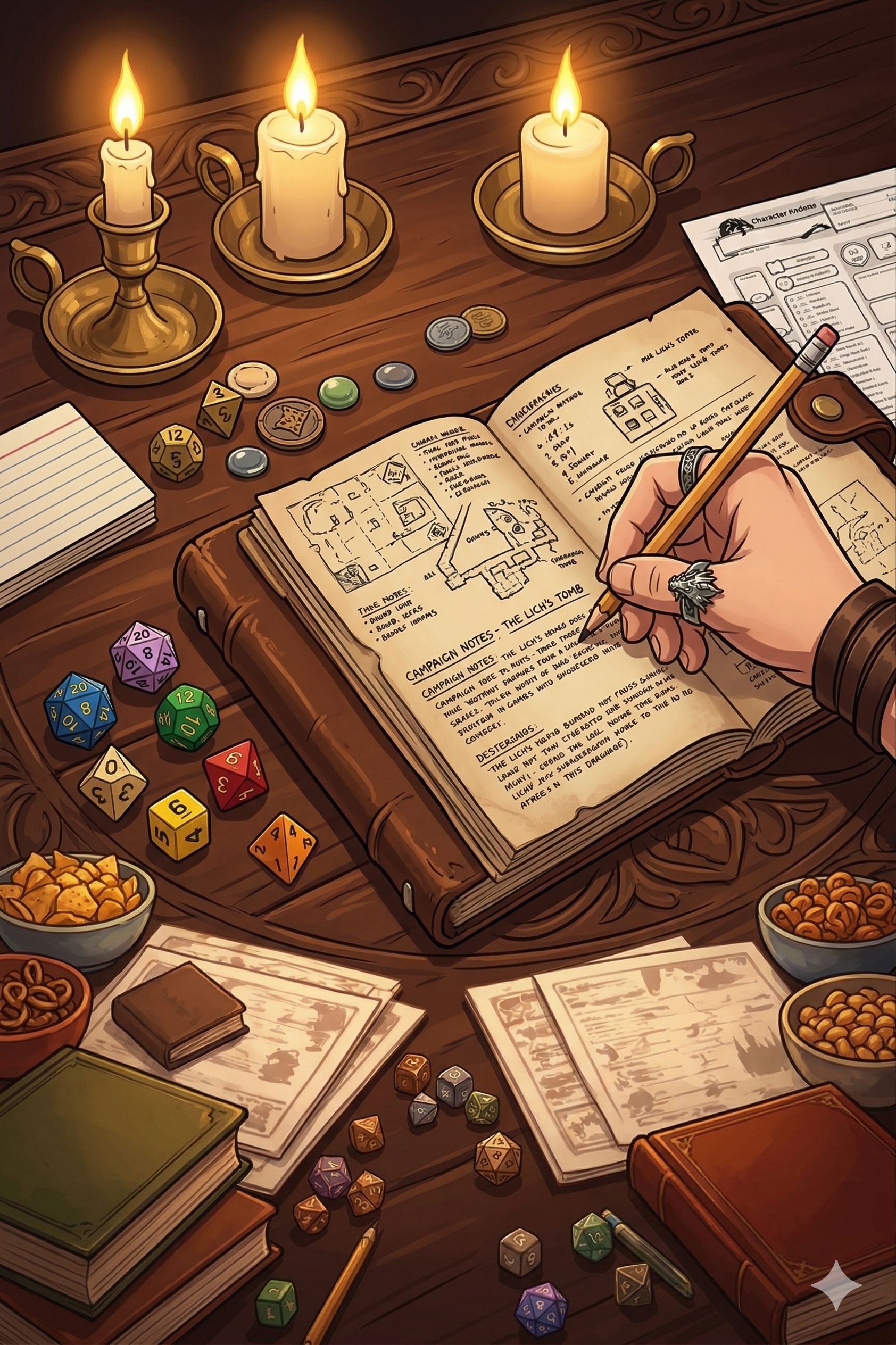
There's a trap new DMs fall into: over-preparing the wrong things. You spend four hours drawing a dungeon map and zero minutes thinking about how the session starts. Then your players sit down, look at you, and you freeze because you don't know what the innkeeper's name is.
Here's what to actually do the night before.
Know your opening scene.
You don't need the whole session mapped out. You need the first five minutes. Where are the players? What's happening around them? What's the first thing they see, hear, or smell when the session begins? A strong opening pulls everyone in immediately and gives you momentum. Write two or three sentences. That's enough.
Know your three most important NPCs.
Not their whole backstory. Just: their name, their vibe, and what they want. That's it. If you know those three things, you can improvise the rest. "Gorlan the blacksmith — gruff, tired, wants to close the shop early." Done. You're ready to play him.
Read your encounter once more.
If you're running a published module, flip through the next section one more time. You don't need to memorize it — you just want it fresh enough that you're not reading everything cold at the table. Highlight anything you know will come up.
Set up your notes where you can actually see them.
This sounds obvious and yet. Put your NPC names, the key plot points, and any rules you know you'll need front and center. Nothing kills momentum like watching your DM dig through three notebooks to find a stat block.
The Day Of: Getting Your Space Right
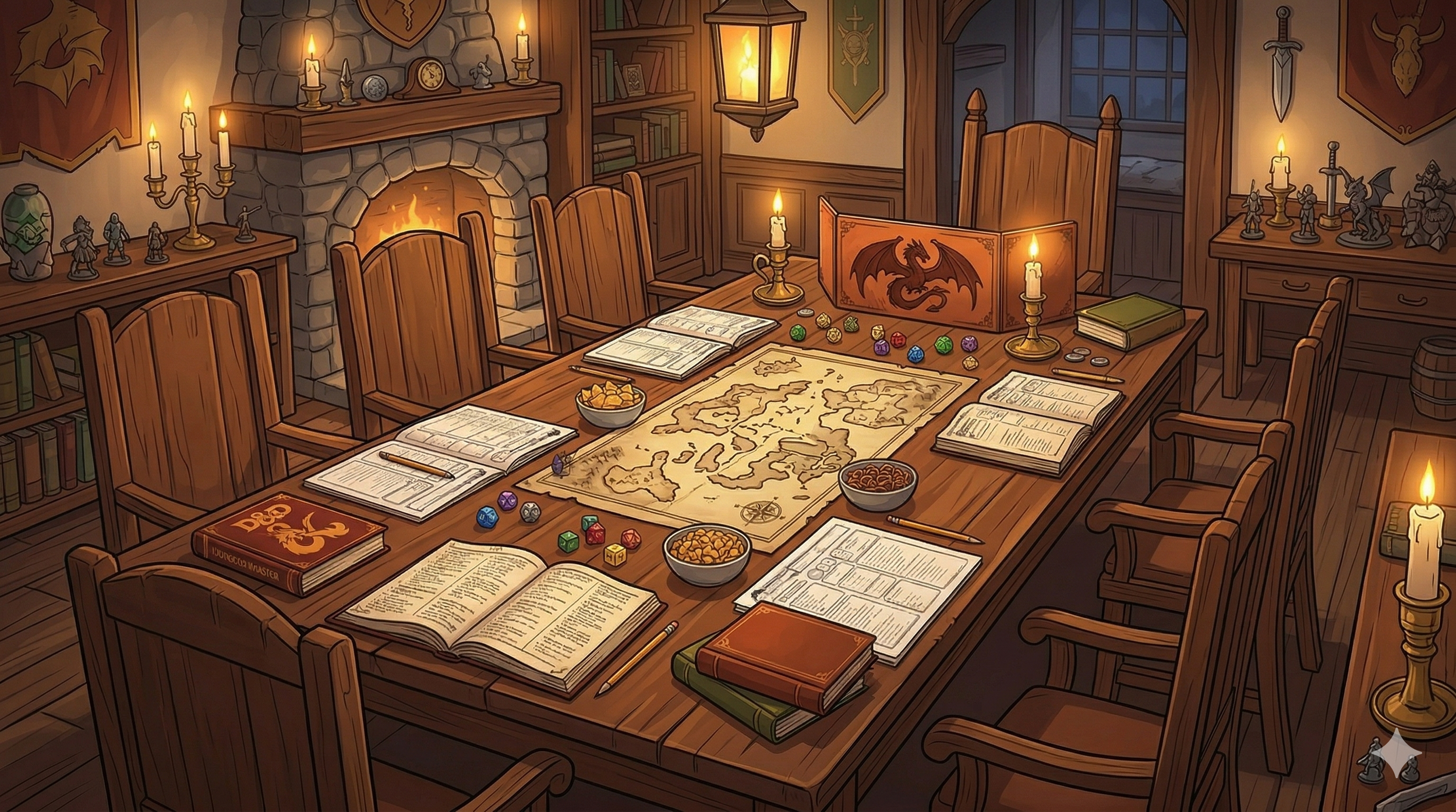
Set the vibe early.
If you're playing in person, have music running when players arrive. It sets the tone immediately and covers any awkward "okay so when are we starting" energy. Check out Tabletop Audio or just search "D&D ambient music" on YouTube — there are hours of free stuff that works great.
If you're playing online, test your audio and your Virtual Tabletop before anyone joins. Owlbear Rodeo is our go-to (seriously, read our full breakdown here) — but whatever you're using, make sure your map is loaded and your tokens are placed before session time. Nothing deflates excitement like a 20-minute tech setup while everyone watches.
Gather your physical essentials.
Dice (at minimum: one full set, two d20s)
Your DM screen if you have one
Your notes — organized, accessible
Pencil and a notepad for tracking initiative and HP
Water. Seriously. You're going to be talking a lot.
Protect your notes.
One of the best things a DM can do is hide information. Use your screen. Keep your laptop angled away. The mystery of what the DM knows is half the fun for your players. Let them wonder.
The Session Checklist: Before You Say "The Adventure Begins…"
Run through this right before you kick things off:
Everyone knows roughly what kind of game this is (tone, setting, vibe)
Players have their character sheets ready and know their basic abilities
You've done a quick Session Zero conversation if this is a new group — table rules, content boundaries, what kind of story you're telling
Your opening scene is locked in
You know the names of at least three NPCs
You have a rough idea of where tonight's session ends (even if it changes)
Initiative tracker or notepad is ready
Snacks are distributed (this is not optional)
At the Table: Things to Remember Mid-Session
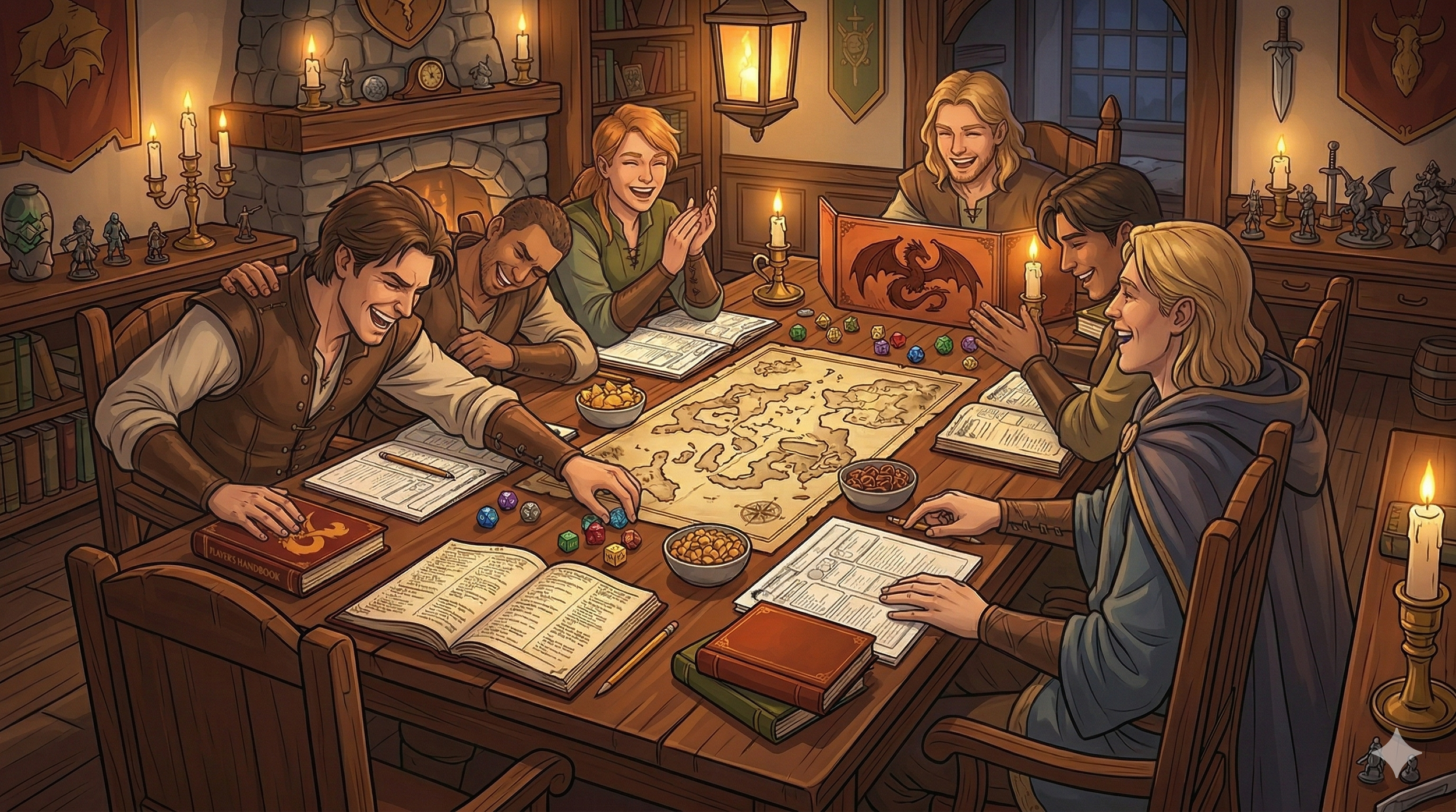
Looks like a gas.
You are the referee, not the enemy.
Your job is not to kill the party. It's not to "win." It's to give your players a world that reacts to what they do. Sometimes that world is dangerous. That's fine. But you're on their side, narratively speaking — you want them to succeed at something interesting.
If you don't know a rule, make a call and move on.
This is the Rule of Cool in action. Make a quick, reasonable ruling, keep the session moving, and look it up after. Your players will not remember the rules dispute. They will remember the moment your improvised ruling made something amazing happen. (We talked about this more here — go read it if you haven't.)
Take notes as you go.
Write down names you invent on the fly. Write down what the players decided to do. Write down any thread they got excited about that you didn't plan for. That stuff becomes your next session.
Watch the energy, not just the clock.
Sessions end better when they end at a natural moment — after a big decision, a reveal, a combat that just resolved. Don't end mid-dungeon just because it's been two hours. But also don't drag a session past its natural peak because you have content left. Read the table. When excitement is high and something just happened? That's your ending.
After the Session: The Five-Minute Debrief
Don't skip this part. Right after the session ends, while everyone is still at the table:
Ask your players two questions.
"What was your favorite moment tonight?" and "Is there anything your character wants to pursue next time?" This takes five minutes and gives you more useful prep material than any amount of solo world-building.
Write down three things immediately.
What the players actually did (versus what you planned), any NPC names or details you invented on the fly, and one thread you want to develop for next session. Future you will be very grateful.
…and now that the snacks are gone, so am I.
The Real Secret
Here's what no checklist can fully prepare you for: the moment your players do something you absolutely did not plan for, and the session gets better because of it.
That's the job. That's the whole thing.
Your players don't need a perfect DM. They need a DM who shows up prepared enough to get started, and flexible enough to let the story go where it wants to go.
You've got this. Now go roll some dice.
Looking for more DM help? Check out our DM Toolkit, our guide to magic items for new DMs, and tips for first-time Dungeon Masters.
What's the thing you wish someone had told you before your first session? Drop it in the comments. 🎲