
Your players just walked into a blacksmith shop you didn't plan. The blacksmith needs a personality. You have about four seconds. Here's what to do.
It happens to every DM.
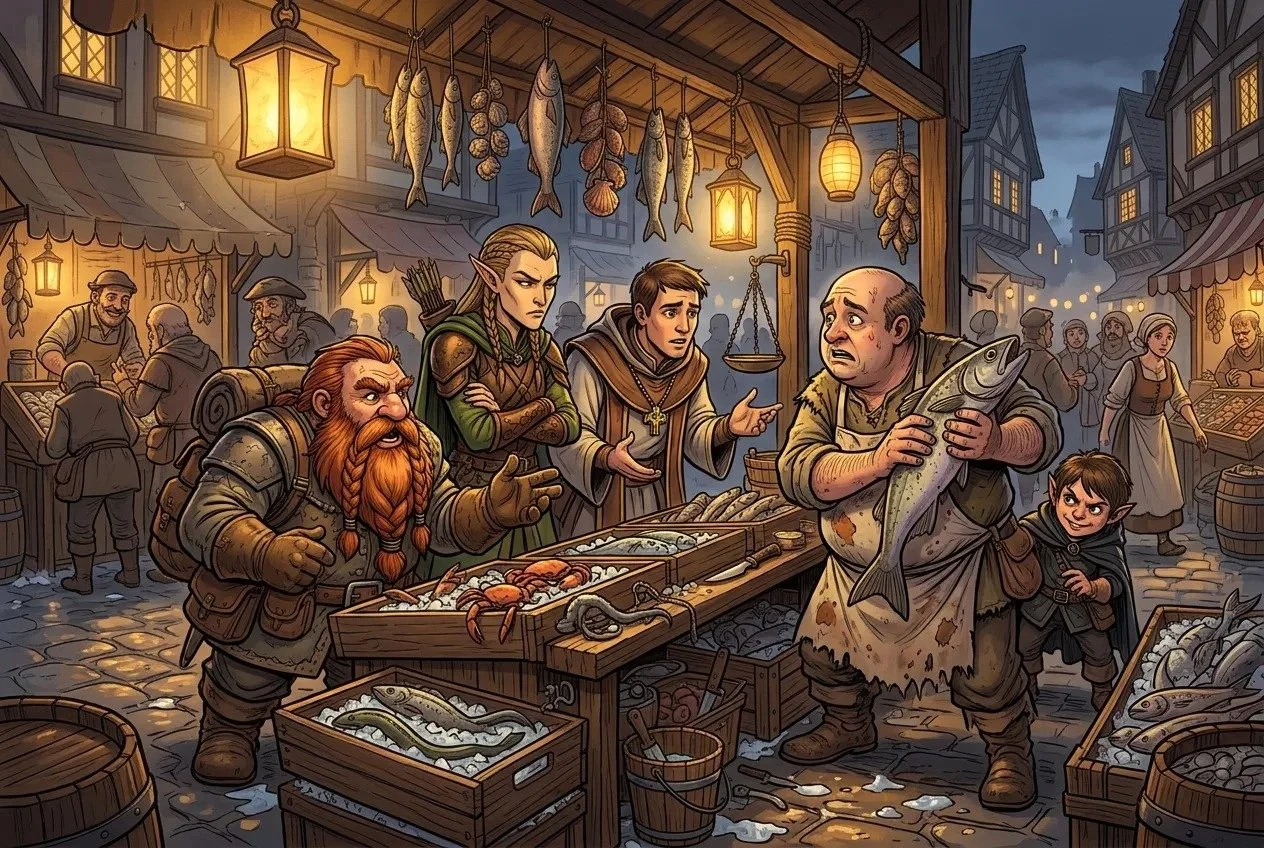
You've prepped your main quest, your key NPCs, your villain's monologue. You're ready. And then your players completely ignore all of it, walk into a random fishmonger's stall, and start interrogating the fishmonger about the local political situation.
The fishmonger now needs to be a person.
This is not a crisis. This is D&D. And with a simple five-minute framework — or honestly, a thirty-second version of it when you're really in a pinch — you can build an NPC that feels alive, memorable, and real. Every single time.
Nobody planned for the fishmonger…
Why Most DMs Overcomplicate NPCs
Here's the trap: you think a good NPC needs a backstory. A family. A tragic past. A detailed personality profile with Myers-Briggs results.
They don't.
Your players are not going to ask the fishmonger about his childhood. They're going to ask him where the mayor lives and whether he seems trustworthy. That's it. And for that, you need exactly three things.
Three things. That's the whole framework.
The Three-Thing Framework
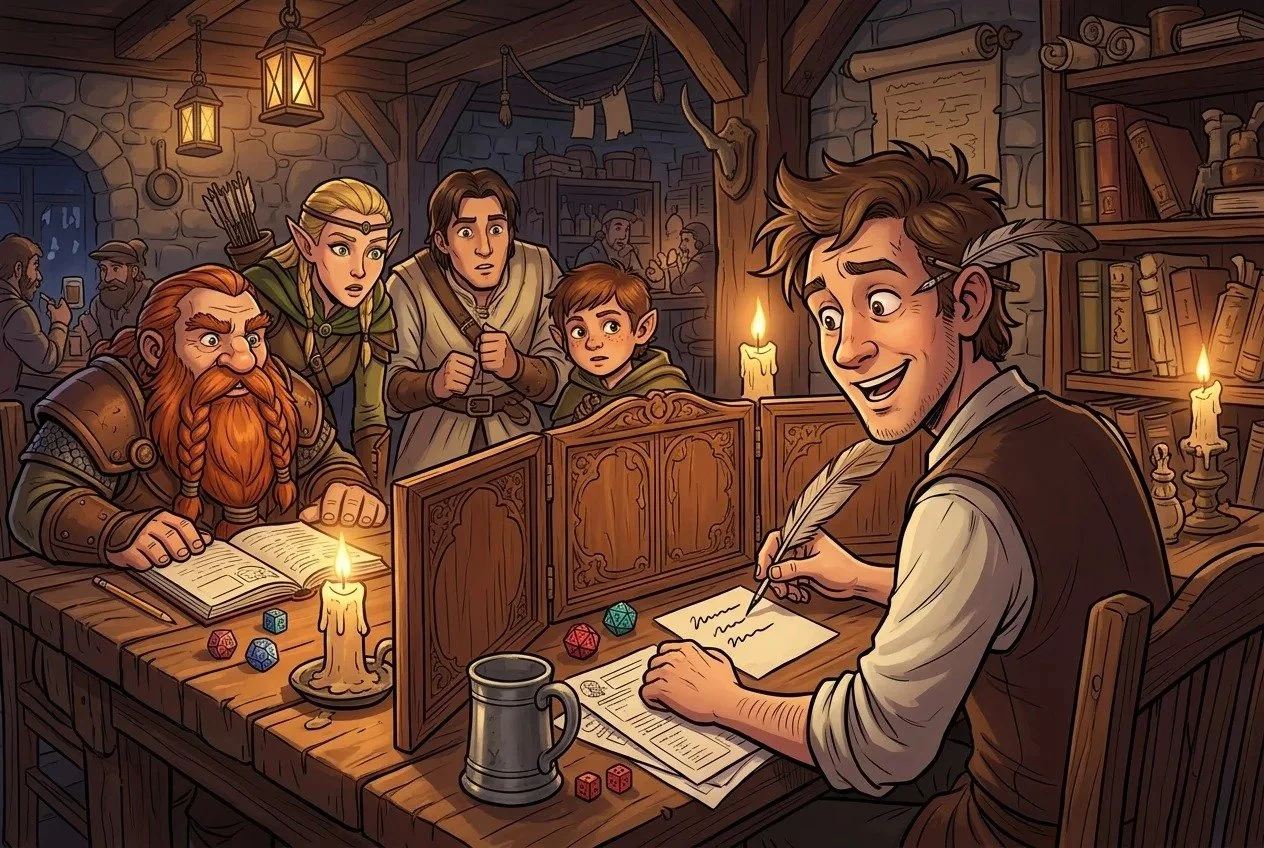
Every NPC you build on the fly needs only this:
A name
A vibe
A want
That's it. Let's break each one down.
Three things. Four seconds. Go…
1. A Name
It doesn't need to be clever. It doesn't need to be lore-accurate. It needs to exist so your players have something to call this person.
Keep a short mental list of go-to fantasy names you can pull from on demand. Mix and match sounds that feel right for your world. Some quick ones to steal right now:
Human-ish: Gorlan, Mira, Aldric, Sura, Brent (yes, Brent — a perfectly ordinary name in a fantasy world is weirdly charming)
Elvish-ish: Thalindra, Vaeros, Sylis, Elowen
Dwarven-ish: Durna, Kolgrim, Bofra, Thundra
Goblin/Small folk: Snip, Fuzz, Nix, Grack
Alternatively: look at literally anything nearby. The brand on your dice bag. The flavor text on your energy drink. A street sign outside. Your players will never know, and "Garrett" the innkeeper has the same energy as any handcrafted fantasy name.
2. A Vibe
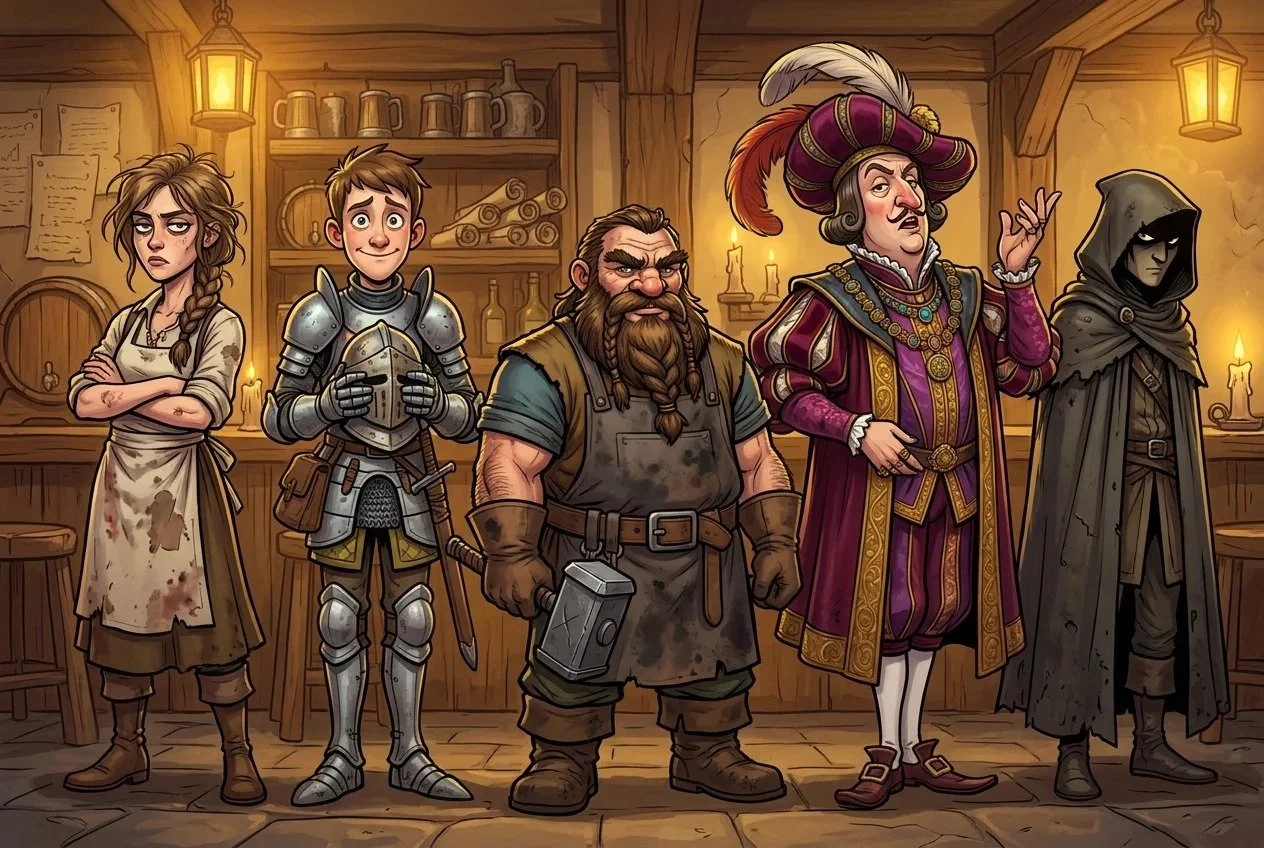
This is the NPC's personality in one or two words. Not a paragraph. Not a backstory. One or two words that tell you how this person moves through the world — and more importantly, how they talk.
Some examples:
Tired and sarcastic
Eager to please, slightly nervous
Gruff but secretly kind
Suspicious of strangers
Cheerfully oblivious
Pompous, loves the sound of their own voice
Quiet, watchful, says less than they know
Pick one. Commit to it. Play it consistently for the duration of the scene and your players will walk away thinking you planned this NPC for weeks.
Pick one. Commit…
The vibe is also your voice guide. "Tired and sarcastic" means short sentences, dry delivery, minimal enthusiasm. "Eager to please, slightly nervous" means fast talking, over-explaining, maybe finishing sentences with "...if that's okay." You don't need to be an actor — you just need one consistent behavioral note to hang onto.
3. A Want
Every person wants something. Even a fishmonger standing behind a stall of questionable-smelling cod wants something. Maybe he wants to close up early. Maybe he wants someone to finally appreciate how fresh his catch is today. Maybe he desperately wants the players to not ask about the missing shipment from last week.
The want does two things for you as a DM.
First, it gives the NPC a reason to behave the way they do. A fishmonger who wants to close early is going to be short with the players, give quick answers, and try to wrap up the conversation. That's a consistent, believable character — built on one simple motivation.
Second, it gives you a potential story hook if you need one. The missing shipment? That could become something. You didn't plan it, but your players might bite — and suddenly your throwaway fishmonger is a minor quest-giver. This is how the best D&D moments happen: by accident, on top of a foundation of three simple things.
The Full Five-Minute Version
If you have a little more time — say, you know your players are heading somewhere specific next session — here's the expanded version of the framework. Same three things, but with one extra layer each.
Name + one physical detail. Not a full description. One thing. A scar. An unusual hat. A habit of cleaning their hands on their apron even when there's nothing on them. One detail gives your players something to picture and remember. "The nervous innkeeper with the twitchy left eye" is going to stick in their memory in a way that "the innkeeper" never will.
Vibe + one speech pattern. A catchphrase, a verbal tic, or a distinctive way of talking. Maybe they refer to themselves in third person. Maybe they always respond to questions with another question. Maybe they punctuate every sentence with "...you understand?" Small and repeatable — that's all you need.
Want + one secret. The secret doesn't have to be dramatic. It doesn't even have to come up in the session. But knowing that your fishmonger secretly owes money to the local thieves' guild changes how you play him, even subtly. Players are remarkably good at picking up on subtext — and that nervous energy you're projecting because of the secret will read as depth even if they never learn what it is.
A Worked Example
Let's put it together in real time.
Your players enter a tavern you didn't fully plan. The barkeep needs to exist.
Name: Mira
Vibe: Cheerfully nosy — she's friendly, but she asks a lot of questions and clearly knows everything that happens in this town
Want: She wants gossip. Specifically, she wants to know why adventurers are in her town and what they're up to.
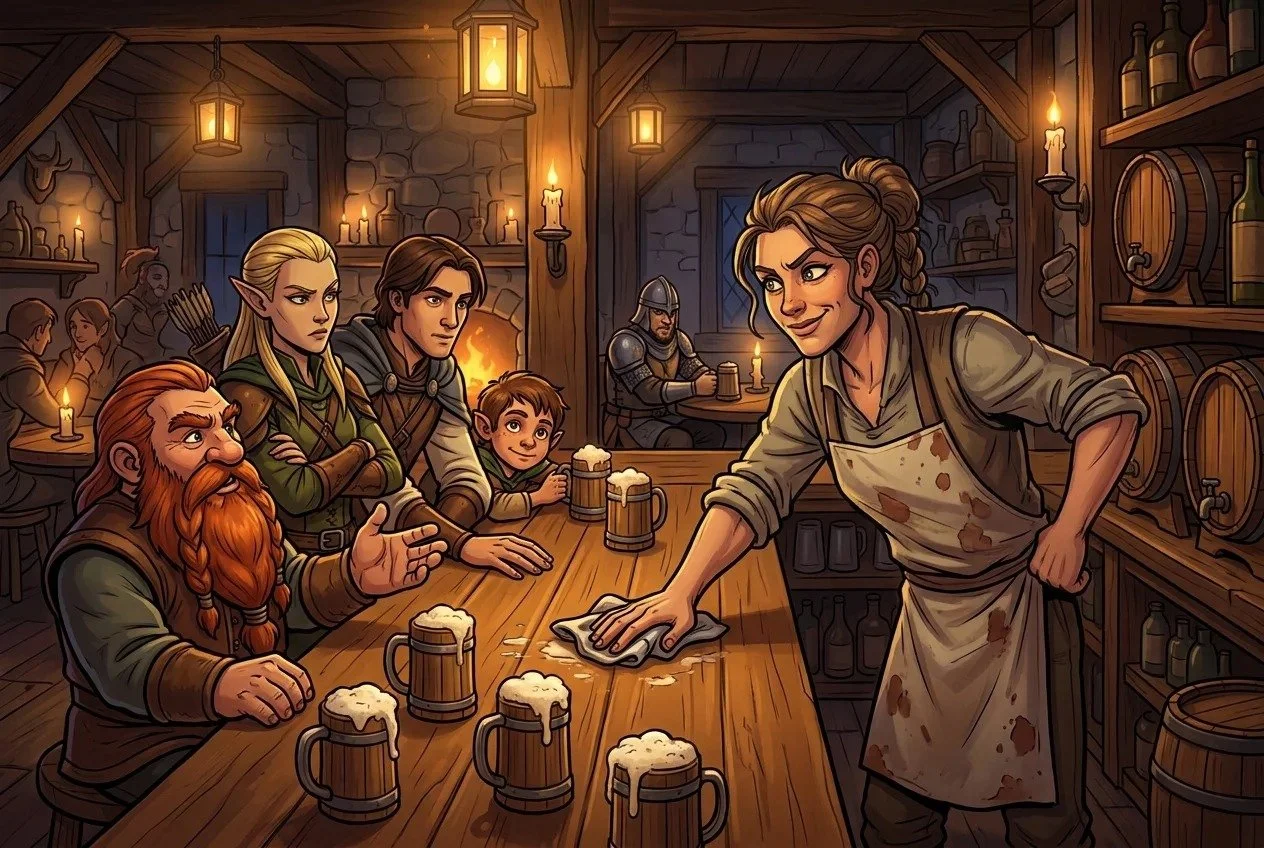
That's Mira. She greets the players warmly, pours drinks before they ask, and immediately starts fishing for information under the guise of friendly conversation. She answers their questions — but always with a follow-up question of her own. She knows things. She's not going to give information away for free, but she might trade it for a good story.
Did you plan any of that? No. Does it feel like you did? Absolutely.
Well now…
Add one physical detail: She's always wiping down the bar even when it's already clean.
Add one speech pattern: Every answer starts with "Well now..."
Add one secret: She's quietly passing information to the town guard about suspicious visitors. Whether the players are now on that list is up to them.
Total build time: under five minutes. Total table impact: significant.
The Cheat Sheet Version
For those moments when you have zero time and need an NPC right now — here's your emergency pocket framework:
[Name] is [vibe] because they want [thing].
Mira is cheerfully nosy because she wants gossip.
Gorlan is gruff and impatient because he wants to close the shop.
Thalindra is suspicious and guarded because she wants to protect a secret.
One sentence. That's a character. Go.
The Real Secret About NPCs
Here's what I've learned after running a lot of sessions: players don't remember the NPCs you spent hours building. They remember the ones that surprised them.
The fishmonger who turned out to have strong opinions about the local nobility. The nervous stable boy who knew way more than he should. The pompous merchant who, when pressed, turned out to actually be pretty funny.
Those moments don't come from elaborate prep. They come from a DM who had a simple foundation and was free to improvise on top of it because they weren't buried in notes.
Three things. Name, vibe, want. Build the rest at the table.
Your players will think you're a genius. You don't have to tell them it took five minutes.
Want more DM prep tips? Check out our Pre-Game Checklist for First-Time DMs, the Rule of Cool, and our full DM Toolkit.
What's the best accidental NPC you've ever created on the fly? Drop it in the comments — I want to hear the fishmonger stories. 🎲